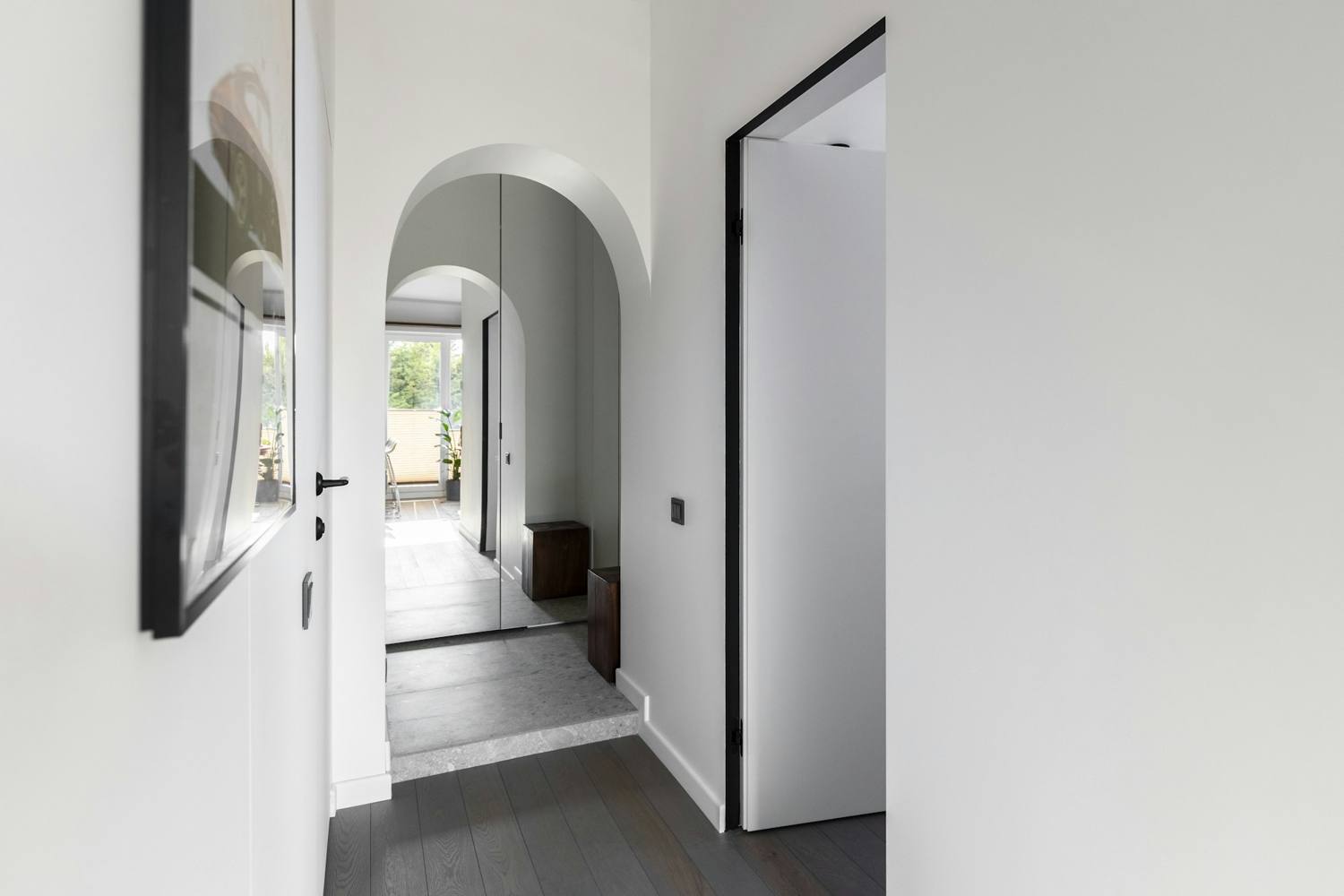
Interior remodeling
Finish carpentry
Trim, built-ins, stairs, and millwork that make a room look finished.
Finish carpentry is the part of the job people actually touch. Casing that meets tight at the miters, base that follows a wavy hundred-year-old wall, a built-in that looks like it came with the house. Nothing in an old St. Louis home is plumb, level, or square, so the work is scribing and fitting, not cutting to a number.
Layout, cutting, installing, filling, sanding, and caulking are all the same set of hands, so nothing gets lost in a handoff. The scope names the profile, the species, and whether you want it paint-ready or finished. The trim crew caulks and fills its own joints instead of leaving them for the painter to hide.
The first decision is paint-grade or stain-grade. It changes the material cost, the labor, and how forgiving the work is on an old crooked wall.
What is included
- Baseboard, casing, and crown molding
- Wainscoting and board-and-batten
- Built-in shelving and cabinetry
- Stair treads, risers, and railings
- Fireplace mantels and surrounds
- Interior door hanging
- Filling, sanding, and caulking for paint
Options
- Paint-grade and stain-grade material
- MDF, poplar, oak, and walnut
- Custom built-ins
- Shiplap and accent walls
How the job runs
Finish carpentry, step by step.
Quote
We look at the rooms, pull profile samples, talk through species and finish, and quote the material and labor by area.
Prep
We protect the floors, set up a cut station, and let the material acclimate in the house before we cut it.
Work
We lay out, scribe, and install the trim or built-in, fitting each joint to the wall rather than to the tape measure.
Finish
Nail holes get filled, joints caulked, the work finished or left paint-ready, and the sawdust is out of the house the same day.
Questions
Straight answers.
Paint-grade or stain-grade trim?
Paint-grade uses poplar or MDF, costs less, and lets us fill and caulk small imperfections, which is why it looks crisp on a wavy old wall. Stain-grade means oak, maple, or walnut with matched grain and joints that cannot be filled, so material and labor both cost more. If you are matching original stained oak in a 1920s house, stain-grade is the only way it will look right.
Can you build custom built-ins?
Yes. Bookcases, window seats, mudroom lockers, and cabinetry flanking a fireplace are regular work. We build to the room, scribe to the wall, and match the existing trim profiles where the built-in meets the house. Send us a photo of what you have in mind and we will draw it and price it.
Do you do stairs and railings?
Yes, including tread and riser replacement over an existing carpeted stringer, new balusters, and newel posts. Railing height and baluster spacing are held to code on anything we touch, even a simple swap. A full stair rebuild that involves the stringers is structural work and gets priced with framing.
Do you paint the trim too?
We can carry it through, and usually recommend it, since the crew caulking and filling is the one making it look finished. If your painter is already on the job we leave it sanded and paint-ready. Stain-grade work we finish ourselves, because the stain and topcoat are part of the carpentry.
What is the lead time?
Trim packages usually start within two to three weeks and take a few days per floor. Custom built-ins run longer because of shop time and material ordering, typically three to six weeks from approved drawings. Specialty hardwood and custom milled profiles add to that.
Related