Exteriors
Exterior painting
Prep-heavy exterior painting and staining on siding, trim, brick, and decks.
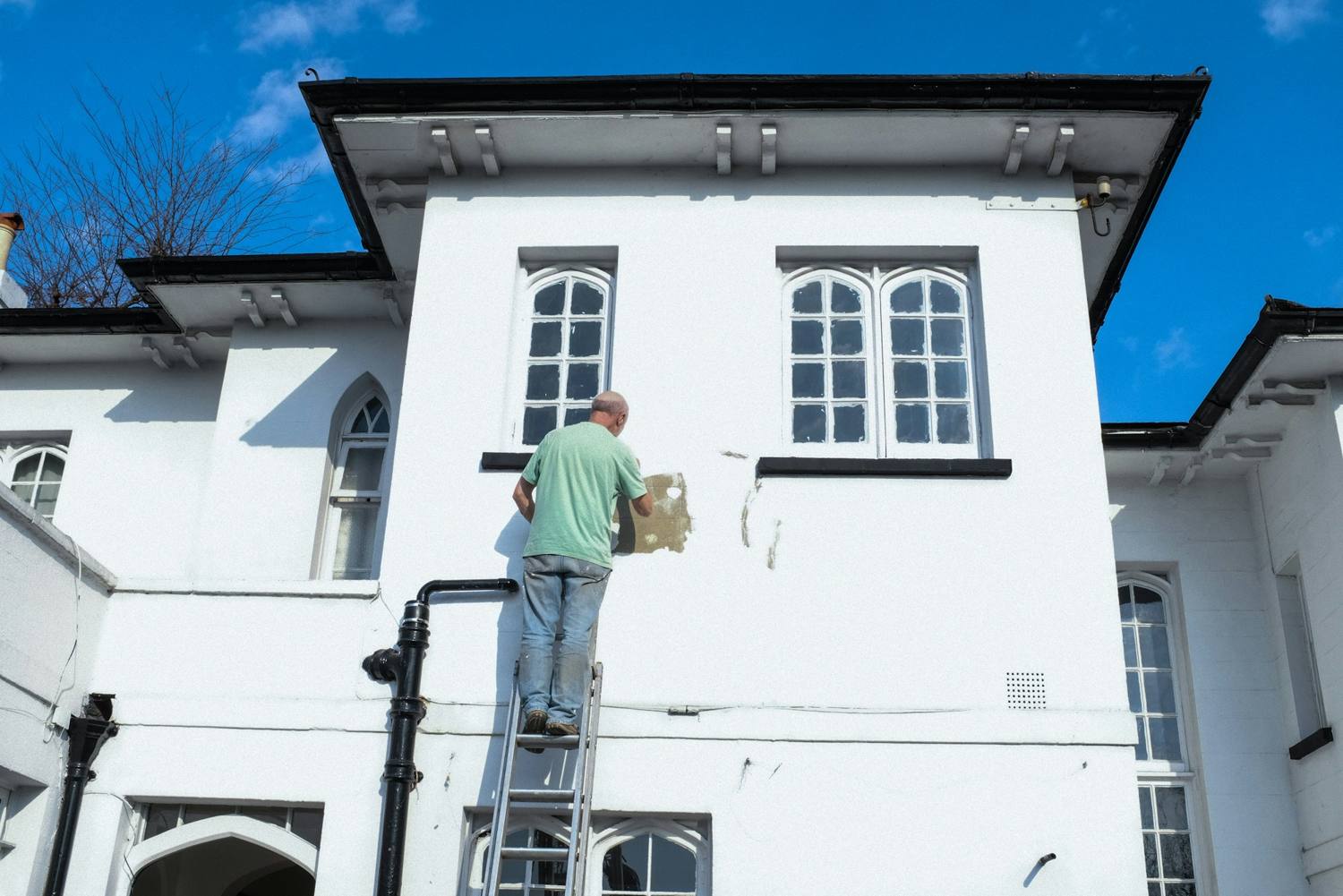
Exterior paint fails from bad prep long before it fails from bad paint. Humid summers, a hard freeze-thaw swing, and south-facing walls that bake all afternoon will find every spot that was not washed, scraped, and primed. Most of our hours on an exterior go in before the finish coat ever comes out of the can.
Prep and paint are priced on separate lines, because prep is where a cheap exterior bid disappears. The scope says what gets scraped, what gets primed, and which boards come off before a brush ever touches the house. The crew lead who walks the house with you at the start is the one here at the end.
If your house is brick, the real decision is whether to paint it at all. We will tell you when the answer is no.
What is included
- Pressure washing of all painted surfaces
- Scraping, sanding, and spot priming of bare wood
- Caulking of gaps, cracks, and trim joints
- Replacement of rotted trim boards
- Two finish coats of exterior paint
- Deck and fence staining
- Cleanup and a touch-up walkthrough
Options
- Sherwin-Williams and Benjamin Moore exterior lines
- Elastomeric coatings for masonry
- Solid and semi-transparent deck stains
- Color consultation
How the job runs
Exterior painting, step by step.
Quote
We walk the house, mark the failing areas and rotted boards, and quote the prep and the coats as separate written line items.
Prep
We wash the house, let it dry, mask windows, lights, and landscaping, and replace any trim too far gone to hold paint.
Work
We scrape, sand, spot prime the bare wood, caulk the joints, then roll and brush two finish coats on siding and trim.
Finish
Masking comes off, the site gets cleaned, and we hand you a roll of tape to flag anything you want touched up before final payment.
Questions
Straight answers.
How long does exterior paint last in St. Louis weather?
On properly prepped wood or fiber cement, a quality acrylic usually holds seven to ten years on shaded elevations and five to seven on the south and west sides that take afternoon sun. Deck stain is a two to three year cycle no matter what the can says. Prep is what moves those numbers, not the price of the paint.
What temperatures can you paint in?
Most exterior acrylics want surface temperature above about 50 degrees with falling humidity, which around here means roughly April through October with good days on either side. We watch the overnight low, not just the daytime high, because a coat that freezes before it cures will fail. We would rather push a week than paint in the wrong window.
Do you replace rotten trim before painting?
Yes, and we price what we can see up front plus an allowance for what turns up under the old paint. Painting a soft board seals water inside it and you will see bubbles by the next summer. Anything we find after the wash gets shown to you before we replace it.
Will you paint brick?
We will, with a breathable masonry coating over proper prep, but think hard first. Painted brick does not go back, and on a 1920s house with soft brick and lime mortar the wrong coating traps moisture and spalls the face. If the brick is sound, tuckpointing and a careful cleaning usually looks better and costs less.
How many coats?
Two finish coats on siding and trim is our standard, over spot primer on any bare wood. One coat can cover a same-color repaint of a sound surface and we will quote it that way if you ask, but it will not last as long. Big color changes and raw wood get a full prime coat first.
Related
Often done together.
Siding systems
Fiber cement, metal, engineered wood, and vinyl siding, installed with proper flashing and trim.
See details →Interior painting
Clean lines, full prep, and low-odor paint throughout the house.
See details →Decks
Composite and wood decks, covered porches, and railings built on proper footings.
See details →Finish carpentry
Trim, built-ins, stairs, and millwork that make a room look finished.
See details →