Exteriors
Waterproofing & flashing
Stop water where it gets in: walls, windows, roof-to-wall joints, decks, and foundations.
Water almost never comes in where the stain shows up. It gets in at a kickout flashing nobody installed, a window head with no tape over it, a deck ledger nailed straight to the sheathing, or a foundation wall with wet clay pressing against it. Our job is to find the entry point, not to keep patching the drywall.
Before we touch anything, we write down what we think the source is and what we are doing about it, so there is a record to hold us to. Below grade, the excavation, the membrane, and the drainage are all ours, which means nobody gets to blame the other guy. The lead who ran the inspection runs the repair.
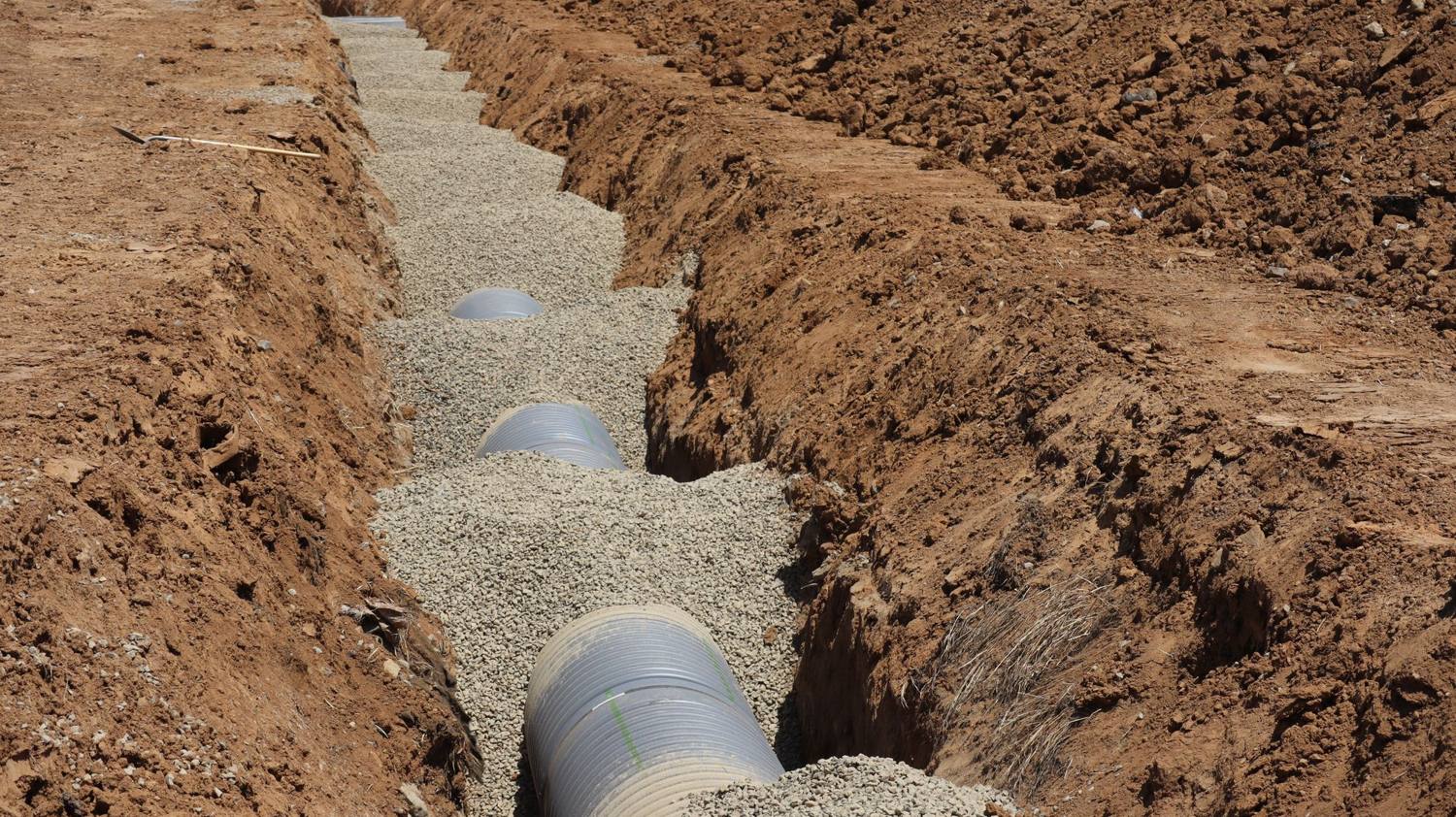
Most homeowners here are weighing an interior drain-tile system against exterior excavation. They solve different problems and they cost very different money.
What is included
- Water-intrusion inspection with hose testing
- Kickout and step flashing repair
- Window and door re-flashing
- Deck ledger flashing and fasteners
- Foundation coatings and drainage board
- Sump and drain tile tie-ins
- Failed sealant removal and replacement
Options
- Exterior foundation membrane
- Interior drain-tile systems
- Liquid-applied flashing
- Through-wall flashing at masonry
- Sump pump installation
How the job runs
Waterproofing & flashing, step by step.
Quote
We inspect inside and out, hose-test the suspect areas one at a time, and quote the repair with the suspected source written down.
Prep
We protect finishes, open only what we need to see the substrate, and stage the excavation or interior access.
Work
We correct the flashing, membrane, or drainage path and replace the wet substrate we find behind it.
Finish
Everything closes back up, the finishes go on, and the repair gets hose-tested again in front of you before anybody leaves.
Questions
Straight answers.
How do you find where water is coming in?
We start outside above the stain and work down, because water travels. Hose testing one area at a time is slow, and it is the only way to prove where water enters instead of guessing. Sometimes there are two sources, and we would rather find both before you pay for drywall.
Do you fix the cause or just the symptom?
The cause. Patching drywall or recaulking over a bad flashing detail buys you one season. If the honest fix is bigger than you expected, we will say so and price the cosmetic repair separately so you can decide.
Is interior or exterior waterproofing better for a basement?
Exterior excavation with membrane and drainage board treats the wall from the water side and is the stronger fix, but it costs more and it disturbs landscaping, walks, and sometimes a deck. An interior drain tile with a sump manages the water that gets in and is often the practical choice on a tight lot. In this area, exterior work on a typical wall commonly runs several times the cost of an interior system.
Will this stop mold?
Stopping the water stops new growth, because mold needs moisture to keep going. What is already in wet framing or drywall has to come out, and when it is widespread that is remediation with its own scope. We are not a testing lab and we will not tell you your air is clean.
Can you do this before I finish my basement?
That is the right order, and we would push you to do it that way. Finding a leak after the drywall, flooring, and trim are in costs far more than fixing it first. We can do the waterproofing scope, let it sit through a couple of hard rains, then start the finish work.
Related
Often done together.
Basement remodeling
Turn an unfinished basement into living space, done dry from the start.
See details →Roofing
Full replacements, storm repairs, and flat roofs on homes and light commercial.
See details →Siding systems
Fiber cement, metal, engineered wood, and vinyl siding, installed with proper flashing and trim.
See details →Concrete work
Driveways, patios, sidewalks, slabs, and steps, poured to last through freeze-thaw.
See details →