Structural & new construction
Concrete work
Driveways, patios, sidewalks, slabs, and steps, poured to last through freeze-thaw.
Concrete in this area lives or dies on what is under it. Our clay swells when wet and shrinks when dry, and the freeze-thaw cycle goes to work on anything that holds water. A compacted gravel base, the right thickness, real reinforcement, and control joints cut on the first day are what keep a driveway from mapping out in five years.
Thickness, base depth, reinforcement, and finish are written on the contract, because those four are where a cheap bid hides. We tear out and haul the old slab, grade and compact the base, form it, and pour it with the same crew that was here yesterday. You have one number and one person to call about it.
Most people are deciding between a plain broom finish and a decorative one. The difference is mostly money and maintenance.
What is included
- Demo and haul-off of the old concrete
- Grading and compacted gravel base
- Forms with rebar or wire mesh
- Pour and hand finish
- Control joints cut to spacing
- Sealer application
- Site cleanup and edge grading
Options
- Broom, stamped, and exposed-aggregate finishes
- Colored concrete
- Garage and shed slabs
- Footings and foundation walls
- Steps and stoops
How the job runs
Concrete work, step by step.
Quote
We measure the area, check drainage and truck access, and quote the thickness, base, reinforcement, and finish in writing.
Prep
We break out and haul the old concrete, excavate, and grade and compact the stone base to the slope we need.
Work
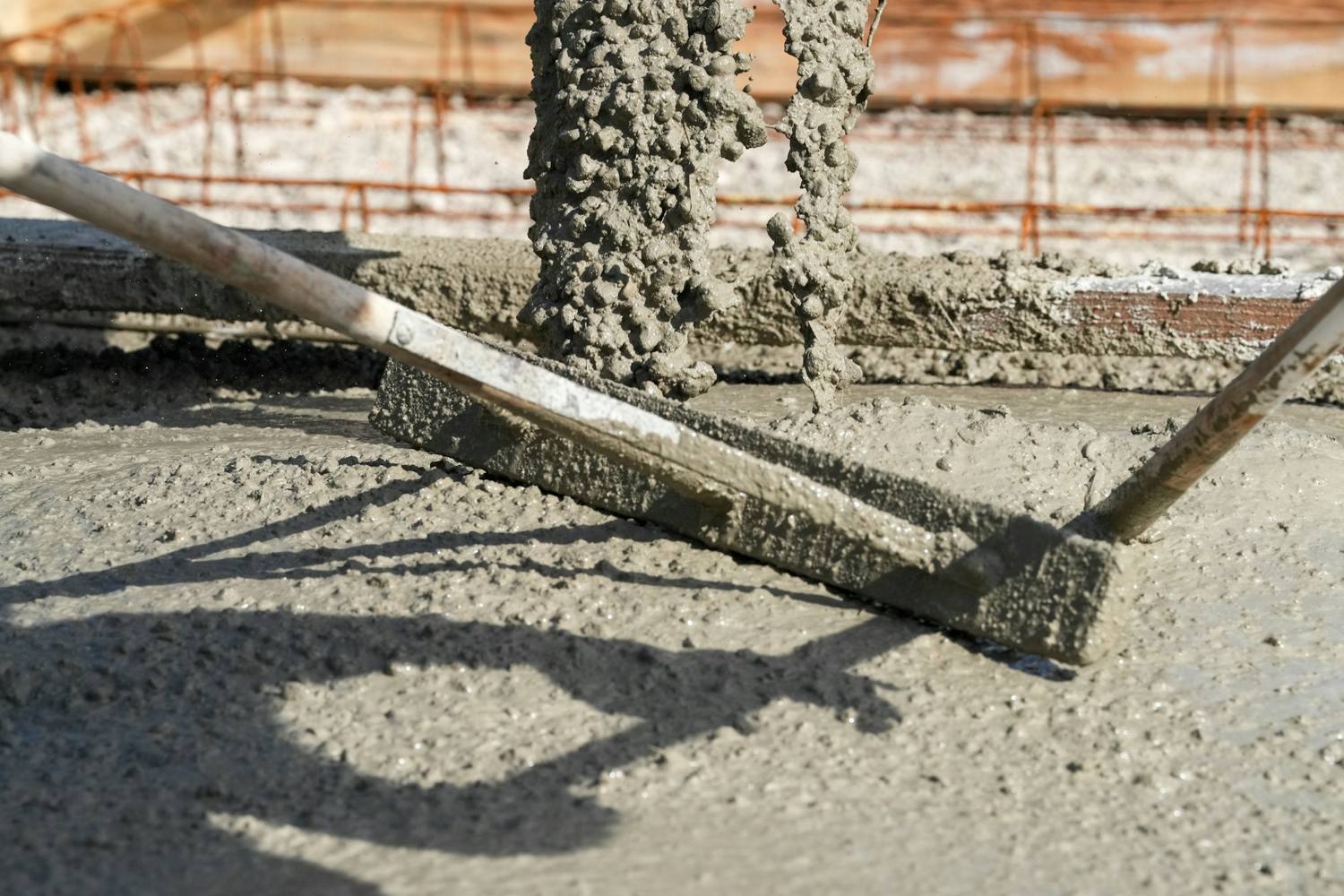
We set forms, place the reinforcement, pour, screed, and hand finish the surface.
Finish
Control joints get cut, forms come out, the edges are backfilled, and we seal it once it cures and leave you the dates for walking and driving on it.
Questions
Straight answers.
How long before I can drive on it?
Walk on it after about 24 to 48 hours and park a car on it after seven days. Keep heavy trucks, dumpsters, and trailers off for a full 28 days while it reaches design strength. Cold-weather pours cure slower, and we will give you the dates for your pour.
Will it crack?
Every slab cracks. The question is whether it cracks where we told it to. Control joints cut at the right spacing within the first day give the concrete a planned place to move, and base prep, thickness, and reinforcement are what keep those cracks tight instead of letting them turn into displaced slabs.
Stamped or plain?
Plain broom finish is the workhorse: cheapest, easiest to repair, and it hides wear. Stamped and colored concrete looks better, costs roughly 50 to 100 percent more, and needs resealing every two to three years to hold the color. Exposed aggregate sits in the middle and handles our winters well.
What about drainage?
Slope is part of the design, not an afterthought. We pitch flatwork away from the house, usually about a quarter inch per foot, and we look at where the water goes once it leaves the slab. If your existing grade already dumps water at the foundation, we will say so before pouring more concrete into the problem.
How thick should a driveway be?
Four inches over a compacted base is standard for cars and light trucks. We go to five or six inches with rebar where you park an RV, a work truck, or a trailer, or where the subgrade is soft clay. Paying for one more inch of concrete is cheaper than replacing a broken slab.
Related
Often done together.
Retaining walls
Block, stone, and timber retaining walls with real drainage behind them.
See details →Decks
Composite and wood decks, covered porches, and railings built on proper footings.
See details →Demolition
Interior and structural demo, garages, sheds, decks, and concrete, hauled away the same day.
See details →